

Suzhou VEICHI Electric Co., Ltd.
VEICHI makes motor drives, servo systems and industrial controls. Its public factory material describes PCB inspection, insertion, assembly and finished-product testing; a Dongguan tissue-paper project shows how its AC310 drives work alongside a PLC and HMI. Together, those sources give a concrete view of both the manufacturing operation and the machine-control task a purchaser needs to specify.
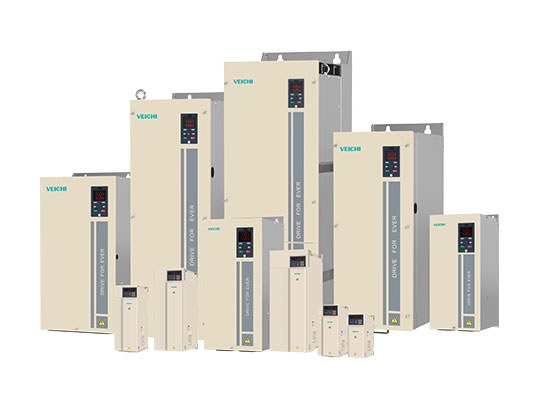
- Suzhou legal entity
- Established in 2013[1]
- Earlier business origin
- Shenzhen · 2005[1]
- Exchange record
- STAR Market 688698 · 29 December 2020[4]
- Machine case
- Dongguan tissue packaging · May 2022[5]
The Shenzhen origin and the Suzhou company are different milestones.
VEICHI’s history starts in 2005; the legal entity described on this page was established in 2013.
A dated company record
The official history records the first Shenzhen inverter business in 2005 and establishment of the Suzhou company in 2013. Suzhou Phase I entered operation in 2016. The Shanghai Stock Exchange’s announcement of 28 December 2020 identifies the listed Chinese entity, 苏州伟创电气科技股份有限公司, and stock code 688698, with trading starting the next day. These facts separate the brand’s earlier business origin, the corporate establishment and its public listing.[1][4]
Manufacturing and development continue together
VEICHI records Suzhou Phase II’s AC-drive and servo-system production base and R&D project as operating in 2023, while Phase III was then under construction. Its 2025 account describes relocations in Suzhou, Shenzhen and Xi’an, including the Suzhou digital factory and upgraded research centres. The same current overview presents industrial automation as its core, alongside robotics and green-energy activities. Those additional businesses have their own products; the industrial AC-drive enquiry remains a defined motor-control task.[1]
From circuit-board assembly to finished-drive testing.
VEICHI’s factory overview connects inspection equipment, production operations and material movement.
SMT: paste, placement and optical inspection
The workshop description names 3D solder-paste inspection, ASM high-speed component placement and automated optical detection. These operations address the surface-mounted PCB assembly before it becomes a complete drive. Inspection therefore appears at the board-production stage as well as later in the assembled product’s testing, with different equipment serving each stage.[1]
DIP: insertion through functional testing
VEICHI lists insertion machines, board separation, wave soldering, post-solder AOI, functional testing, coating and dispensing. Its factory description names AC300 and AC10 power boards as examples for this line. The named operations connect component insertion and soldering with inspection and board-level functional testing before later assembly work.[1]
Material distribution and assembly
The assembly account describes components entering an intelligent material-distribution system, with AGV transport supplying the relevant assembly lines. This connects material movement with the finished-product assembly operation, rather than treating automation as an unexplained label. An order requiring component traceability can ask for the model-specific lot and assembly records.[1]
Finished-product reliability testing
After assembly, the public description places the product in reliability-testing equipment before release. It also names PLC/IPC-based automatic testing and classification and an ESOP work-instruction system. For an industrial order, the handover can identify the applicable inspection and test scope alongside the supplied unit’s serial number and configuration.[1]
One master, four slaves, and a PLC that sees every drive.
The Dongguan tissue-paper packaging project is dated May 2022 and names AC310 drives, a VI20 HMI and a VC-series PLC.
A flexible material needs coordinated handling
The case describes automatic cutting, bagging and packaging of base tissue paper. It identifies unwinding, traction, cutting, film pulling and intermediate delivery as demanding parts of the process, where poor coordination can lead to paper breaks, film tracking errors or empty bags. That makes the drive task more specific than continuous motor speed alone: acceleration and proportional synchronization must fit the material path and machine sequence.[5]
Commands and feedback follow different paths
The installed inverter arrangement uses one master and four slaves. The PLC and HMI externally supply the master’s frequency reference; the slaves receive the master’s pulse output and synchronize proportionally. Separately, all master/slave drive statuses return to the PLC over RS485-RTU. The report attributes stable operation to the arrangement, but it does not publish an independently verified throughput or scrap-rate measurement. Its concrete value is the identifiable control architecture.[5]
What to retain for a comparable machine
A machine proposal based on this example should identify the motor roles, pulse-reference scaling, master/slave ratio and PLC status signals. The original project combines VEICHI components; a third-party controller needs its own interface definition. The machine builder also needs to agree how communication loss, a slave fault and a material-path interruption affect the whole machine, rather than accepting drive operation alone as complete machine acceptance.[3][5]
AC310’s narrow body and expandable control platform.
The product page describes cabinet arrangement and control interfaces; the current manual adds the parameter detail.
Motor-control choices
AC310 uses a book-style narrow-body arrangement with a straight-through cooling path. The current V1.3 manual lists asynchronous, permanent-magnet synchronous and synchronous-reluctance motors, and V/F, sensorless vector, closed-loop vector and voltage/frequency-conversion control. Motor type and feedback are therefore part of selecting the control setup. The product’s compact shape is a cabinet-design input, while cooling clearance and heat removal still follow the installation instructions.[2][3]
Standard network versus additional hardware
The product page identifies Modbus RTU as standard and PROFIBUS-DP, CANopen and PROFINET as optional routes. It describes two SPI expansion-card channels and automatic recognition of expansion cards. Its download list also separately offers a ModbusTCP extension-card manual. A requested network name should consequently be accompanied by the fitted card and its configuration documents; it should not be inferred from the standard RS485 connection used in the paper-machine case.[2][5]
Agree the duty against the document revision supplied with the drive.
The official web specification and current V1.3 manual publish different overload durations. They are kept separate here.
A real revision check before ordering
The web table gives G-type 150% rated current and P-type 120%, both for one minute. Printed page 3 of the current V1.3 manual instead gives G 150% for 89 seconds and P 120% for 35 seconds, alongside different short-duration entries. This profile does not choose a universal duration from those two sources. For a machine with repeated peaks, the supplier’s offer should state the complete model, hardware/software revision, applicable document and duty cycle so that the quoted capability can be checked consistently.[2][3]
IP20 is the drive enclosure, not the complete machine cabinet
The web specification describes IP20 and forced-air cooling, with derating above 40°C and above 1,000 metres altitude. It also separates a maximum no-load temperature from loaded operation. A paper-processing machine’s cabinet may need to manage dust and internal heat; the drive’s IP20 rating does not define that cabinet’s protection. Cabinet temperature, ventilation and site altitude belong with the continuous motor current in the selection brief.[2]
A useful handover includes the settings behind the machine behaviour.
The AC310 manual lets the integrator name the parameter groups instead of asking for an unspecified commissioning service.
Acceleration and the material path
Printed page 19 of V1.3 separates acceleration/deceleration time, the reference frequency used to calculate it, time units and S-curve settings. Those distinctions matter in a tissue-paper machine because a speed ramp that works for the motor may still disturb the material path. Retain the accepted ramp settings and reference basis with the machine recipe and motor data so that replacement or reset of a drive does not silently change production behaviour.[3][5]
Communication and recovery settings
Printed page 54 groups Modbus addressing, baud rate, data format, response timing, failure timeout and disconnection behaviour in F12. A handover can record these alongside the PLC register mapping and parameter backup. Fault and recovery behaviour should be tested as part of the whole machine’s acceptance. This is VFDMatch’s procurement guidance based on the named manual parameters, rather than a preconfigured setting recommendation for every AC310 installation.[3]
Explore VEICHI products on VFDMatch.
Continue with the published series or exact model before preparing your request.
A brief that makes the next reply useful.
Copy these prompts and add your project details. Keep the same scope when comparing quotations.
- Machine process, motor list and material-handling sequence
- Full AC310 model and hardware/software revision with applicable manual
- G/P duty, continuous current and complete repeated-peak cycle
- For a coordinated machine: master/slave ratios and pulse-reference scaling
- PLC/HMI, fitted network card, register mapping and fault/recovery behaviour
- Cabinet temperature, dust protection, cooling, altitude and accepted parameter backup
Buyer questions
Was the Suzhou company established in 2005?
The official history dates the Shenzhen business origin to 2005 and the Suzhou company’s establishment to 2013. The exchange separately records its 29 December 2020 listing.
Does RS485 synchronize the slaves in the Dongguan case?
The report says the four slaves use the master’s pulse output for proportional synchronization. RS485-RTU separately sends every drive’s status back to the PLC.
Which AC310 overload duration should my purchase order use?
The reviewed web table and V1.3 manual differ. Ask for the quoted model/revision’s applicable document and agreed current/time duty rather than combining their values.
Is PROFINET included with the standard Modbus RTU connection?
The product page describes Modbus RTU as standard and PROFINET as an optional route. Specify the actual fitted interface and configuration deliverables.
Sources & editorial review
Company and product facts are drawn from the sources below. The project briefs and procurement notes are VFDMatch editorial analysis. Statutory disclosures establish company records; order-specific technical acceptance uses the applicable product documents.
- Official company and manufacturing page
VEICHI company, factory and milestones
Shenzhen business origin versus Suzhou establishment; SMT, DIP, material distribution, assembly/testing and dated 2023–2025 developments. Production-rate claims are not independently audited here.
Reviewed 2026-10-08 - Official product page
AC310 product and download page
Book-style design, standard Modbus RTU versus optional interfaces, product specifications and current engineering-download links.
Reviewed 2026-10-08 - Manufacturer engineering manual
AC310 frequency inverter manual · V1.3
Complete 88-page PDF; V1.3 on back cover. Printed p.3 motor/control and overload table; p.19 acceleration/deceleration and p.54 communication parameters. Linked download dated 2026-03-12.
Reviewed 2026-10-08 - Stock-exchange disclosure
Shanghai Stock Exchange listing announcement
2020-12-28 announcement identifies 苏州伟创电气科技股份有限公司, code 688698 and first trading date 2020-12-29.
Reviewed 2026-10-08 - Manufacturer-published machine case
AC310 tissue-paper slitting installation in Dongguan
Project dated May 2022: AC310, VI20 HMI and VC-series PLC, one master/four slaves, pulse synchronization and separate RS485-RTU status feedback.
Reviewed 2026-10-08
Ready to define the configuration?
Bring your motor nameplate, load cycle and controller details to the next discussion.